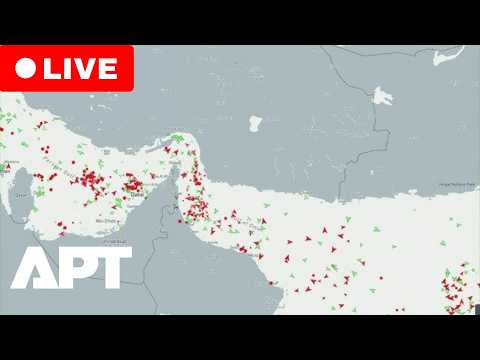
A Live Strait of Hormuz Ship Tracker Webcam allows viewers to follow the movement of tankers, cargo ships, naval vessels, and support ships navigating the region as the conflict between Iran, Israel, and the United States of America continues to evolve.
As tensions escalate in the Middle East, global attention has turned to one of the most strategically important waterways on Earth: the Strait of Hormuz. With military strikes, naval deployments, and threats to commercial shipping unfolding in real time, millions of people are now watching live ship tracking and webcam feeds to monitor what is happening in this narrow maritime corridor.
Why the Strait of Hormuz Matters
The Strait of Hormuz connects the Persian Gulf to the Gulf of Oman and the Arabian Sea. It is bordered by Iran to the north and Oman and the United Arab Emirates to the south.
This narrow channel is one of the most important shipping routes in the world. Roughly one-fifth of the planet’s oil supply travels through the strait each day, making it a critical chokepoint for global energy markets.
More than 20 million barrels of oil per day move through this corridor from major producers including Saudi Arabia, Iraq, Kuwait, Qatar, the United Arab Emirates, and Iran.
Any disruption to shipping in the Strait of Hormuz can immediately affect global energy prices, international trade, and economic stability.
War Has Put Global Shipping on Edge
The current crisis began after military strikes by the United States of America and Israel on Iranian targets in early 2026. Iran responded with missile attacks, drone strikes, and threats to shipping in the Persian Gulf.
Since the conflict began, commercial ship traffic through the Strait of Hormuz has dropped significantly as many vessels avoid the area due to safety concerns.
Several ships have reportedly been attacked or damaged, and some vessels have anchored outside the strait while waiting for the security situation to stabilize.
Energy markets have already reacted strongly. Oil prices have surged amid fears that the conflict could disrupt global supply chains.
Watching the Conflict in Real Time
Live ship trackers and webcam feeds have become powerful tools for monitoring what is happening on the water.
Using Automatic Identification System signals transmitted by ships, these tracking systems display:
- Real-time ship positions
- Vessel type and destination
- Tanker routes and cargo traffic
- Naval vessel activity in the region
- Ships waiting outside the strait
When combined with a live webcam view, viewers can sometimes watch tankers and cargo ships physically moving through the narrow channel between Iran and Oman.
These tools are used by journalists, energy analysts, shipping companies, and everyday observers who want to understand how the conflict may affect global trade.
What Ships Are Moving Through the Strait
On a typical day during peacetime, around 100 cargo vessels pass through the Strait of Hormuz, many of them oil tankers or liquefied natural gas carriers.
These ships carry energy supplies that power economies across Asia, Europe, and beyond.
However, during periods of conflict the number of vessels can drop sharply as shipping companies reroute traffic or delay voyages to avoid danger.
Some vessels have begun using alternative routes and pipelines where possible, but there is no true replacement for the massive shipping capacity of the Strait of Hormuz.
Why Millions Are Watching the Ship Tracker
Live ship trackers have turned the Strait of Hormuz into one of the most watched maritime regions in the world.
Viewers are tracking:
- Oil tankers attempting to pass through the strait
- Naval patrols by regional and international forces
- Ships waiting offshore for safe passage
- Changes in global energy shipping routes
For energy traders and geopolitical analysts, these movements provide early clues about how the conflict could affect oil prices and global supply chains.
A Window Into Global Power and Trade
The Strait of Hormuz is only about 21 miles wide at its narrowest point, yet it carries an enormous share of the world’s energy trade.
That means events unfolding in this small stretch of water can ripple across the global economy within hours.
With the United States of America, Israel, and Iran now locked in a dangerous confrontation, the world is watching the Strait of Hormuz more closely than ever.
Through live ship tracker webcams, anyone can follow the movements of tankers, cargo vessels, and naval ships navigating one of the most strategically important waterways on the planet.